My story
Self-taught, since 2010.
From a game parlour in class 8 to Chief Architect of an AI company.
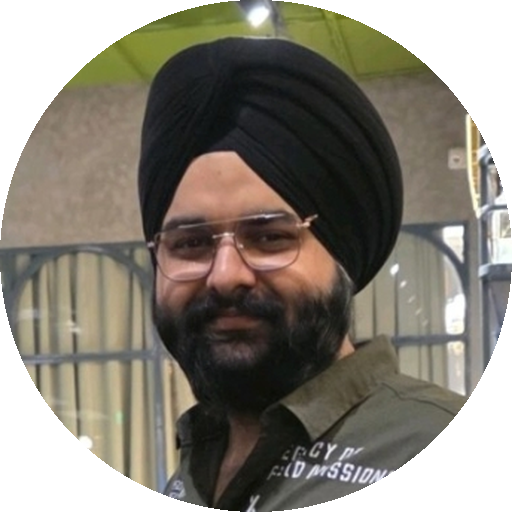
Class 8
The game parlour.
My first job and my first business were the same thing. I wanted a PlayStation. My father, a businessman to the bone, said I could have one on one condition: buy it or earn it. So in class 8 I ran a game parlour, paid him back every rupee, and the PlayStation was mine. It was the first thing I built that paid for itself.
After class 12
Delhi, and odd jobs.
The summer after class 12 I came to Delhi. Call centres, a clothes shop, a stint as a recovery agent, and then a clothes store of my own. None of it was the calling. In the quiet hours in that store I started nibbling at an LG Cookie, and wrote my first code on it.
The engineer’s journey
Learning the trade online.
A domain reseller, a forum owner, a hosting company to run, small things built for people who needed them. That was the first real engineering, learned by doing it for strangers. Then products on CodeCanyon and freelance work through Envato Studio, Elto, Fiverr and clients who came direct. More than 350 projects, for clients in more than 35 countries. Every one of them taught me something the next one needed.
Startups
Things that had to scale.
Then startups, in Delhi NCR and around the world: the core integrations at Shiprocket, the first product live in 45 days at HumanFirewall, a legacy platform rebuilt at ValueLabs, five years on a Silicon Valley marketplace at Balluun. The work got bigger and the stakes with it.
The last six years
AI, with customers on the other end.
Devnagri AI across 22 languages, as architect and then fractional CTO. Then TWINii, where I am Chief Architect and we build real-time AI twins of real experts. Agents, RAG, voice and the evals that keep them honest, in production, where it counts.
Now
Still learning, still shipping.
Every day something new goes into the next build. In Apple terms, the most important product I have made is the one I am building today. I live in Delhi, keep hours that reach the UK and the US, and take a small number of engagements with teams whose AI has to work for real customers.
How I work
Four habits I bring to every system.
Picked up the expensive way, on systems that had customers waiting.
Measure before you move
The first thing I do on any system is find out what it actually does: the traces, the costs, the paths customers take. Opinions come after.
Interrupt early
A bad call is cheapest the day it is made. I would rather say so in the design review than in the incident review.
Boring where it does not matter
Novelty goes into the product, not the plumbing. State lives somewhere dull and disposable, so the interesting parts can change.
Learn by shipping
Everything I know came from putting something in front of real people and fixing what broke. I still work that way: a small real release teaches more than a long plan.